
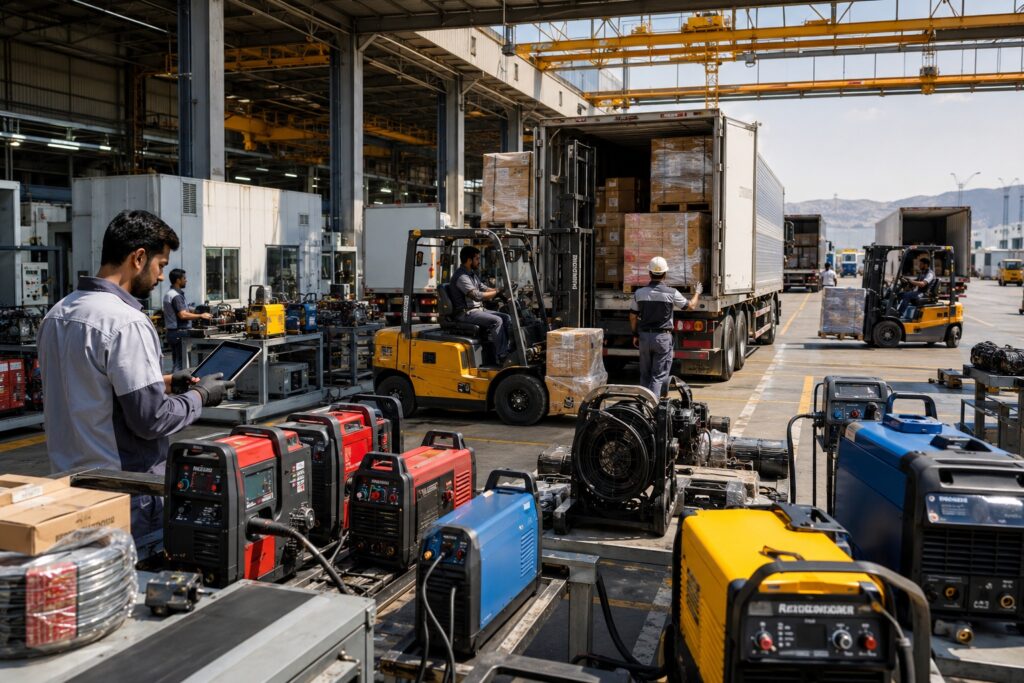
Welding equipment Saudi Arabia plays a vital role in supporting the Kingdom’s growing construction, manufacturing, fabrication, oil and gas, and heavy engineering sectors. Choosing reliable welding machines, cutting systems, consumables, and accessories helps industrial businesses improve productivity, maintain consistent weld quality, and meet demanding project requirements.
Why Welding Equipment Is Critical to Saudi Industry
Welding is fundamental to industrial development because it connects the structures and systems that modern infrastructure depends on.
Steel frameworks, pipelines, storage tanks, pressure systems, machinery, transportation equipment, and countless fabricated components require reliable joining processes. The performance of these operations depends heavily on selecting equipment capable of delivering the required output consistently.
Saudi Arabia’s operating environment also creates specific challenges. Equipment may be required to perform in fabrication workshops, remote industrial areas, large project sites, or demanding outdoor conditions.
Working with a supplier that understands these environments helps businesses choose equipment according to actual application needs rather than simply purchasing based on machine specifications.
A knowledgeable industrial welding equipment supplier can help customers evaluate duty cycles, power requirements, material types, portability, welding processes, and anticipated production volumes before making an equipment decision.
A Complete Welding Solution Starts with Understanding the Application
There is no single welding machine that is ideal for every industrial application.
The correct equipment depends on several factors, including:
- Base material and thickness
- Required welding process
- Production volume
- Weld quality expectations
- Indoor or outdoor operation
- Available power supply
- Portability requirements
- Operator experience
- Project duration
For example, a fabrication workshop producing steel assemblies continuously may prioritize high-duty-cycle machines designed for long operating hours. A maintenance contractor working across multiple locations may instead need portable equipment that can be transported quickly.
This is where access to professional welding solutions in Saudi Arabia becomes valuable. Equipment selection should begin with the job requirement and then identify the technology capable of completing that job efficiently.
MIG Welding Equipment for Productive Fabrication
MIG welding is widely used in production and fabrication environments where speed and repeatability are important.
The continuous wire-feed process can support efficient welding across a broad range of industrial applications. It is commonly used for manufacturing, general steel fabrication, equipment production, automotive applications, and structural component assembly.
Businesses evaluating MIG systems should consider factors such as amperage range, wire-feed performance, duty cycle, torch configuration, and compatibility with the materials being welded.
A reliable supplier of MIG welding machines Saudi Arabia can help companies match equipment capacity with production demands, helping avoid both underpowered systems and unnecessarily oversized machines.
For high-volume operations, selecting the correct MIG equipment can contribute to smoother workflow and consistent productivity across multiple welding stations.
TIG Welding for Precision and High-Quality Finishes
When precision and weld appearance are important, TIG welding is often the preferred process.
TIG systems are frequently used for stainless steel, aluminum, thin materials, specialized fabrication, and applications where accurate control of the weld pool is essential.
Industries working with high-value components may require machines offering advanced controls for current, pulse settings, and arc characteristics.
Choosing appropriate TIG welding equipment for industrial applications can help operators achieve greater control while reducing the likelihood of excessive heat input or unnecessary finishing work.
The right supplier should be able to guide customers through equipment capabilities based on the material and quality requirements of the intended application.
ARC Welding for Rugged Industrial Requirements
ARC welding remains a dependable choice for demanding environments.
Its practical setup and ability to operate effectively across a wide range of conditions make it valuable for construction, maintenance, repair, heavy engineering, and field fabrication.
Portable ARC machines are particularly useful when welding needs to be performed away from permanent workshop facilities.
For businesses handling remote projects, ARC welding machines Saudi Arabia can provide the flexibility needed to carry out repairs and fabrication tasks directly where the equipment or structure is located.
Selecting a machine with suitable amperage output and durability is essential, particularly when equipment will be exposed to demanding operating environments
Advanced Cutting Equipment Is Equally Important
Industrial fabrication does not begin with welding. Before materials can be joined, they often need to be accurately cut and prepared.
This makes cutting technology an equally important part of an efficient fabrication operation.
Plasma cutting systems, oxy-fuel equipment, pipe cutting solutions, and specialized preparation tools can improve production speed while helping fabricators achieve accurate dimensions.
A supplier offering welding and cutting equipment Saudi Arabia provides businesses with the opportunity to source complementary technologies from a single industrial partner.
When cutting and welding systems are selected as part of an integrated workflow, businesses can improve material preparation, reduce unnecessary handling, and create more efficient production processes.
The Importance of Welding Consumables
Even the most advanced welding machine cannot perform effectively without appropriate consumables.
Welding wires, electrodes, filler materials, contact tips, nozzles, and other components directly influence arc stability and welding performance.
Consumable selection should consider:
- Base metal
- Welding position
- Mechanical properties
- Environmental conditions
- Required weld characteristics
Reliable access to industrial welding consumables Saudi Arabia is particularly important for production facilities where unexpected shortages can interrupt operations.
Businesses should therefore consider consumable availability when selecting a welding equipment supplier. Maintaining consistent access to frequently used materials can help production teams avoid preventable delays.
Equipment Availability Can Influence Project Schedules
Industrial procurement is closely connected to project planning.
When a project requires additional welding machines, cutting systems, or accessories, delays in equipment delivery can affect multiple stages of production.
For contractors working under strict schedules, timely equipment availability can be as important as equipment performance.
A supplier with access to a broad range of welding machines and accessories can help customers respond more effectively to changing requirements.
This becomes especially valuable when businesses need to establish additional welding stations, replace equipment, or prepare for new projects within limited timeframes.
Sales and Rental Options Provide Greater Flexibility
Not every industrial requirement should be handled through equipment ownership.
Some businesses need welding equipment continuously and benefit from purchasing machines for long-term use. Others require additional capacity only for specific contracts, shutdowns, maintenance periods, or temporary projects.
Having access to both sales and rental options gives procurement teams greater flexibility.
Businesses can purchase equipment that supports core operations while using welding equipment rental solutions when temporary capacity is required.
This approach can help organizations manage capital expenditure while ensuring that project teams still have access to suitable equipment when workloads increase.
Technical Knowledge Adds Value Beyond Equipment Supply
Welding technology continues to evolve.
Modern machines may include digital interfaces, programmable welding parameters, improved inverter technology, multi-process capabilities, and enhanced energy efficiency.
While these developments provide significant benefits, selecting the correct technology requires an understanding of how those features apply to real production requirements.
A strong supplier relationship can provide access to product knowledge that helps customers make better-informed purchasing decisions.
Instead of selecting equipment solely according to price, businesses can consider factors such as:
- Expected operating hours
- Machine durability
- Process compatibility
- Maintenance requirements
- Energy consumption
- Future production needs
Working with a trusted welding equipment partner can therefore create long-term value beyond the initial transaction.
Supporting Large-Scale Industrial Projects
Major industrial projects often require multiple welding processes operating simultaneously.
One area may require structural steel welding, while another needs pipeline fabrication or equipment maintenance. Different teams may require separate machines with different power outputs and operating characteristics.
Coordinating these requirements demands careful equipment planning.
Suppliers supporting large industrial customers should be capable of helping businesses identify the appropriate combination of machines, cutting systems, accessories, and consumables.
This integrated approach can simplify procurement and help project managers maintain better visibility over equipment requirements.
Safety Should Always Be Part of Equipment Selection
Welding involves heat, electrical energy, fumes, ultraviolet radiation, and molten metal. Equipment selection should therefore always be considered alongside workplace safety.
Businesses should ensure operators use appropriate PPE and follow established welding procedures.
Depending on the application, this may include welding helmets, gloves, protective clothing, respiratory protection, ventilation systems, and welding screens.
Machines should also be operated according to manufacturer recommendations and inspected regularly.
A professional supplier can support safer operations by providing appropriate equipment information and helping customers understand the intended operating conditions of the machines they select.
Choosing a Welding Equipment Supplier in Saudi Arabia
Selecting a supplier should involve more than comparing product prices.
Industrial buyers should evaluate whether the supplier can support both immediate requirements and future operational needs.
Important considerations include equipment range, product knowledge, availability of consumables and accessories, technical guidance, sales and rental options, and responsiveness to project requirements.
A supplier that understands industrial applications can help customers make decisions based on productivity and lifecycle value rather than initial cost alone.
This is particularly important for organizations investing in heavy-duty welding equipment that will operate under demanding conditions for extended periods.
Building Long-Term Procurement Efficiency
Industrial companies frequently manage equipment from multiple manufacturers and suppliers. While this may provide flexibility, it can also create complexity.
Working with a capable welding equipment supplier can simplify procurement by consolidating access to machines, cutting systems, accessories, and consumables.
This can help businesses:
- Reduce procurement complexity
- Standardize equipment where appropriate
- Improve consumable planning
- Respond faster to project requirements
- Maintain consistent equipment availability
Over time, a strong supplier relationship can become an important part of an organization’s broader operational strategy.
The Future of Welding Technology in Saudi Arabia
As Saudi Arabia continues investing in advanced manufacturing and industrial development, welding technology will continue evolving alongside it.
Digital welding controls, automation, robotic systems, energy-efficient inverter technology, and data-driven production monitoring are becoming increasingly relevant to modern fabrication environments.
At the same time, traditional welding processes will continue playing an essential role in construction, repair, maintenance, and field operations.
The future will therefore require suppliers capable of supporting both proven technologies and emerging solutions.
Businesses that maintain access to modern equipment and knowledgeable technical support will be better positioned to adapt as industrial requirements change.
Conclusion
Choosing the right welding equipment supplier is an important decision for any organization involved in fabrication, manufacturing, construction, maintenance, or heavy industry.
The ideal supplier should provide more than individual machines. Businesses benefit from access to a complete ecosystem of welding systems, cutting technologies, consumables, accessories, rental options, and application-focused support.
By selecting equipment according to actual operational requirements, companies can improve productivity, maintain consistent welding performance, and prepare more effectively for future projects.
For organizations operating across Saudi Arabia’s growing industrial sector, building a relationship with a dependable welding equipment supplier can help create a stronger foundation for efficient and reliable fabrication operations.